 Hide
Hide




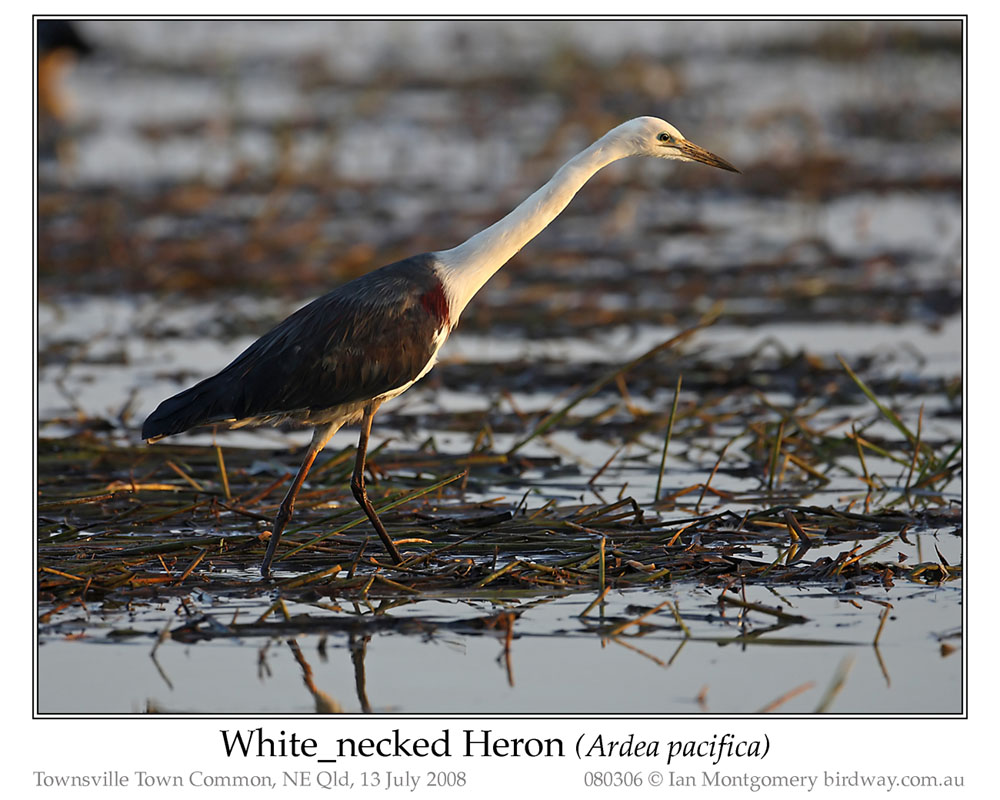
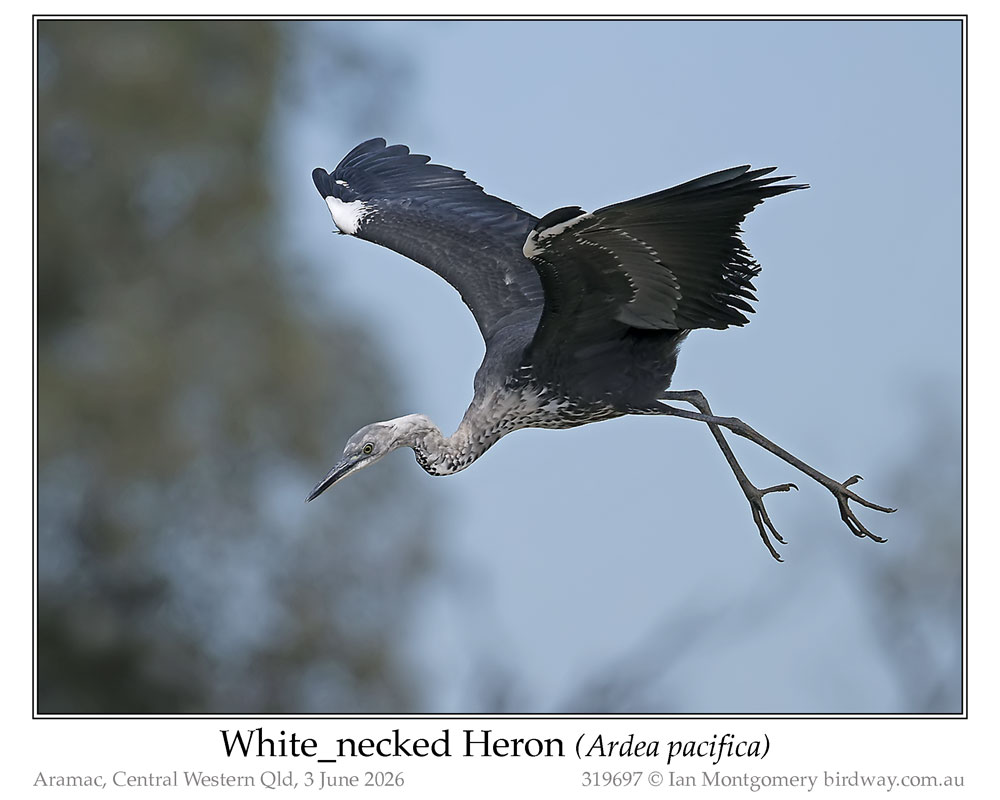
Herons and their close relatives Egrets almost alway hunt either by standing motionless, waiting for unsuspecting prey to come within striking distance, or by carefully stalking like the White-necked or Pacific Heron in the first photo.
Rarely however, they do something completely different, as I discovered when taking photos of the following White-necked Heron in Aramac, a small town more or less in the middle of Queensland. We stopped there for a break when travelling back to Townsville after a birding trip to SW Queensland last June.
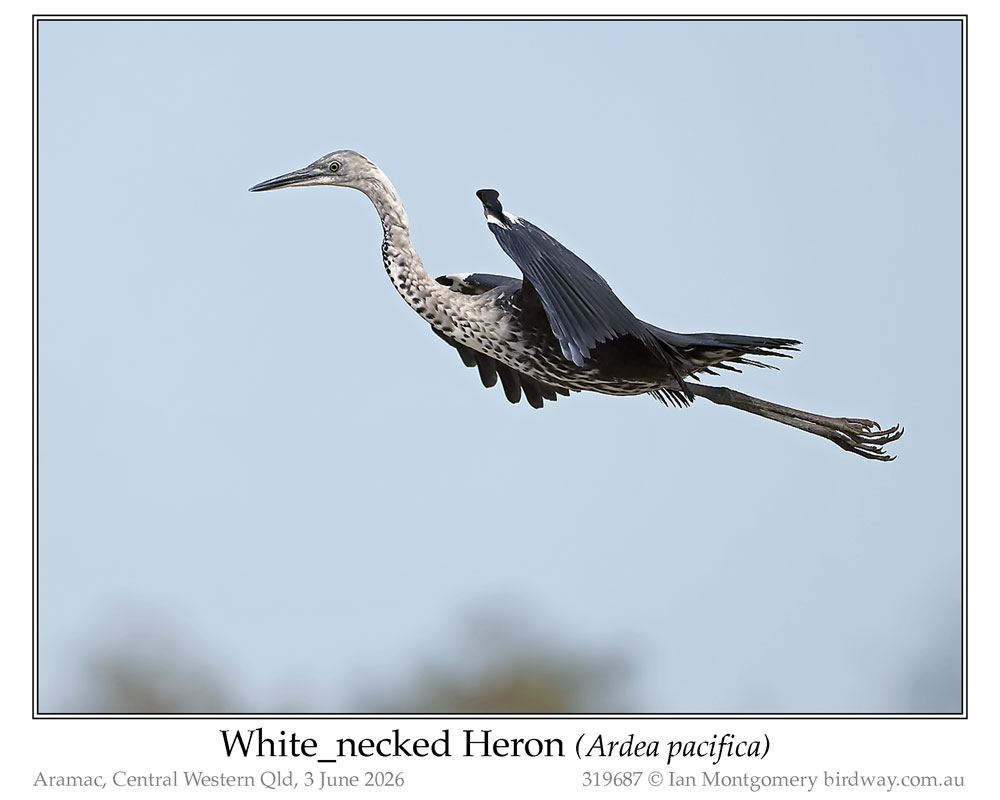
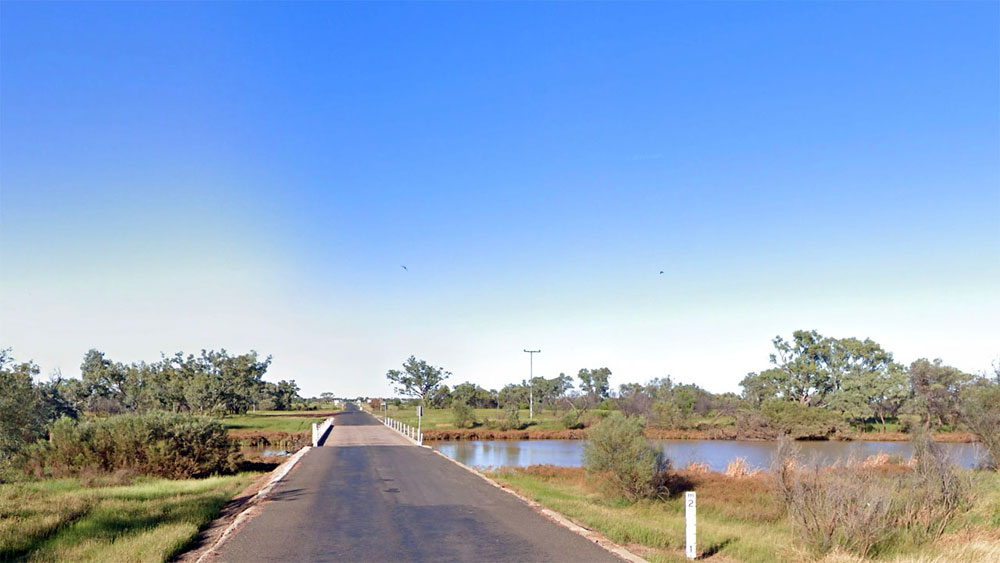
The Heron was one of several White-necked Herons flying back and forth at a height of maybe 10 metres above the body of water in the photo below. I wasn't sure why they were doing so, but I was about to find out. Because I wanted to get a choice of photos of it in flight, I was taking photos continuously at a rate of 15 frames per second, so I got a good record of exactly what happened.
Suddenly the one I was photographing slammed on the brakes, so to speak, in the next photo, and went into a steep dive towards the water.
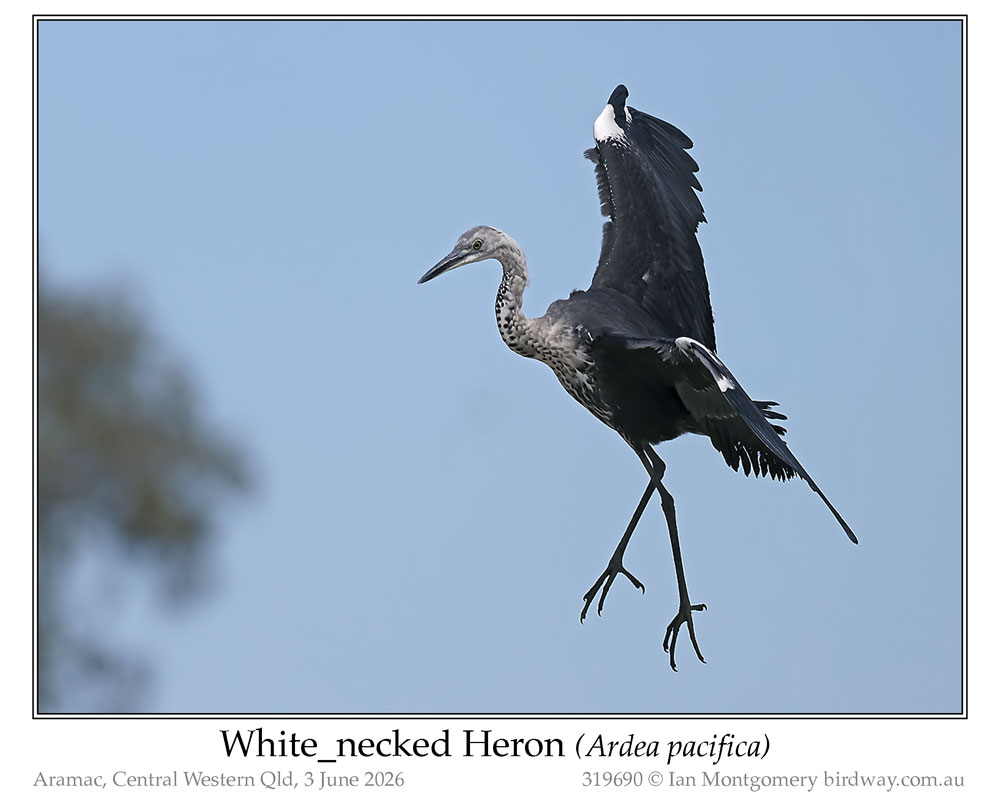
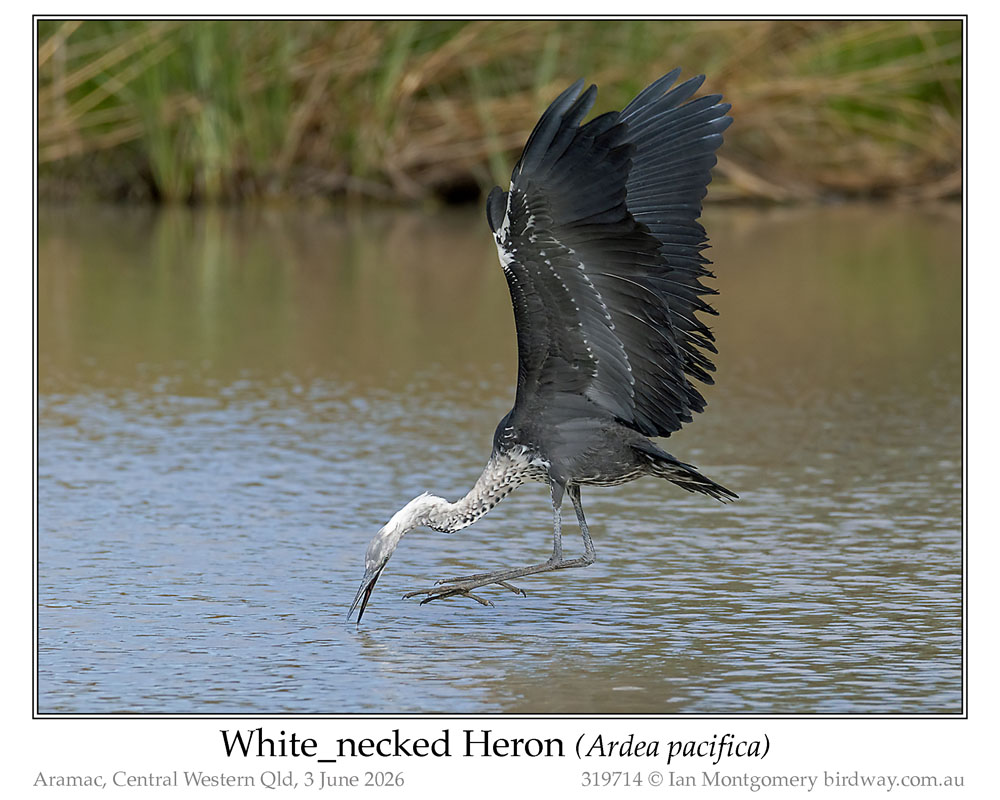
Here is the Heron diving towards the water. The photos are numbered in sequence, so the elapsed time can easily be calculated at the rate of one fifteenth of a second per increment.
The next photo shows the bird at the instant at which it is about to plunge into the water. This photo was taken less than two seconds after the first photo of the bird in flight, so you can appreciate how rapid the dive was.
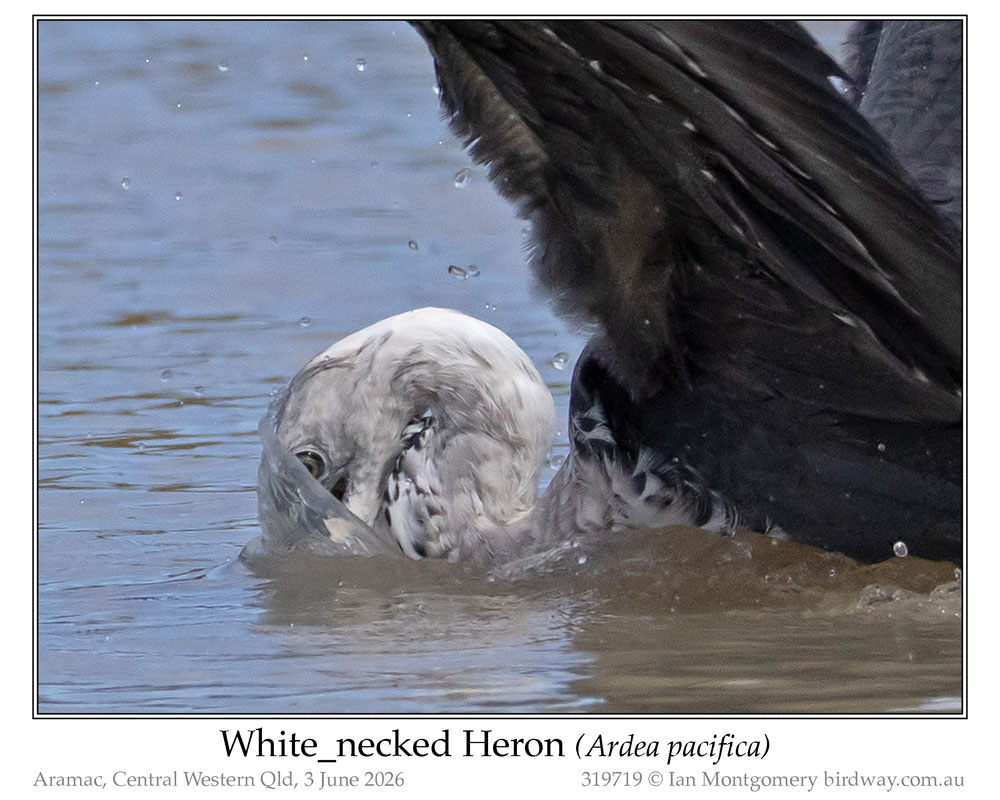
The next photo, heavily cropped to focus on the head, shows the bird a third of a second later at the deepest point of its dive. You can see in this and the following photos that it holds its wings above the surface. Herons don't have waterproof feathers and they risk drowning if the wing feathers get saturated by being submerged.
A fifth of a second later, in the next photo, the bird has caught a fish and is using its strong wings to start to raise itself out of the water.
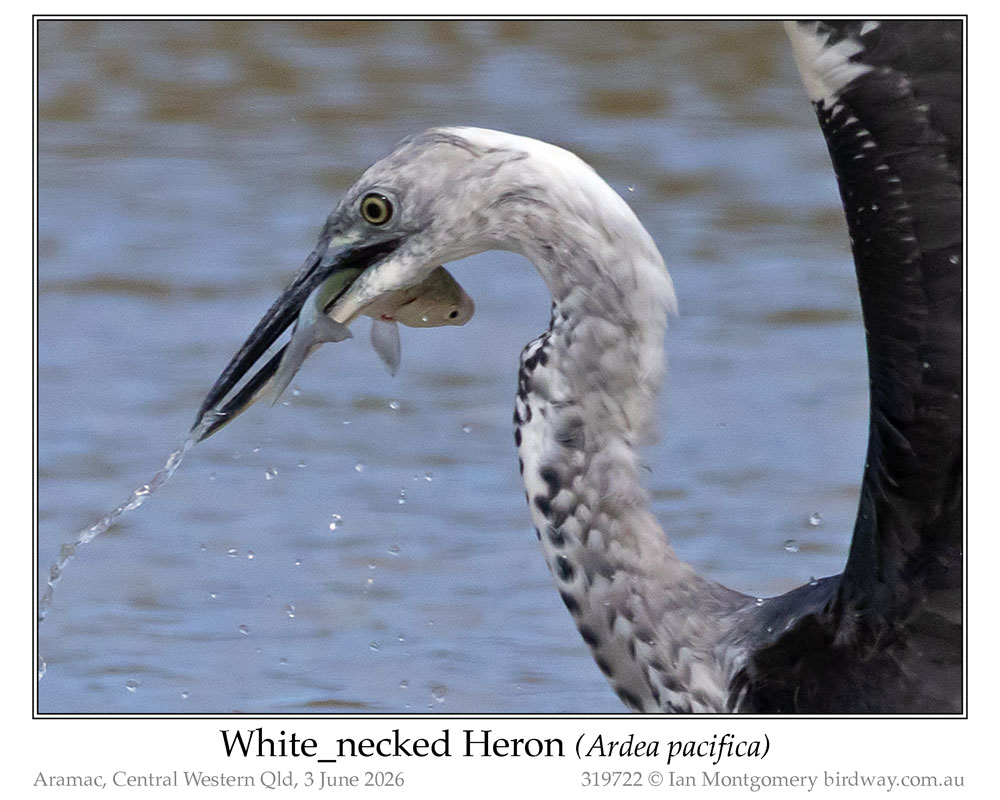
After another half a second, and only a second after entering the water, it is already airborne with only its feet still trailing in the water.
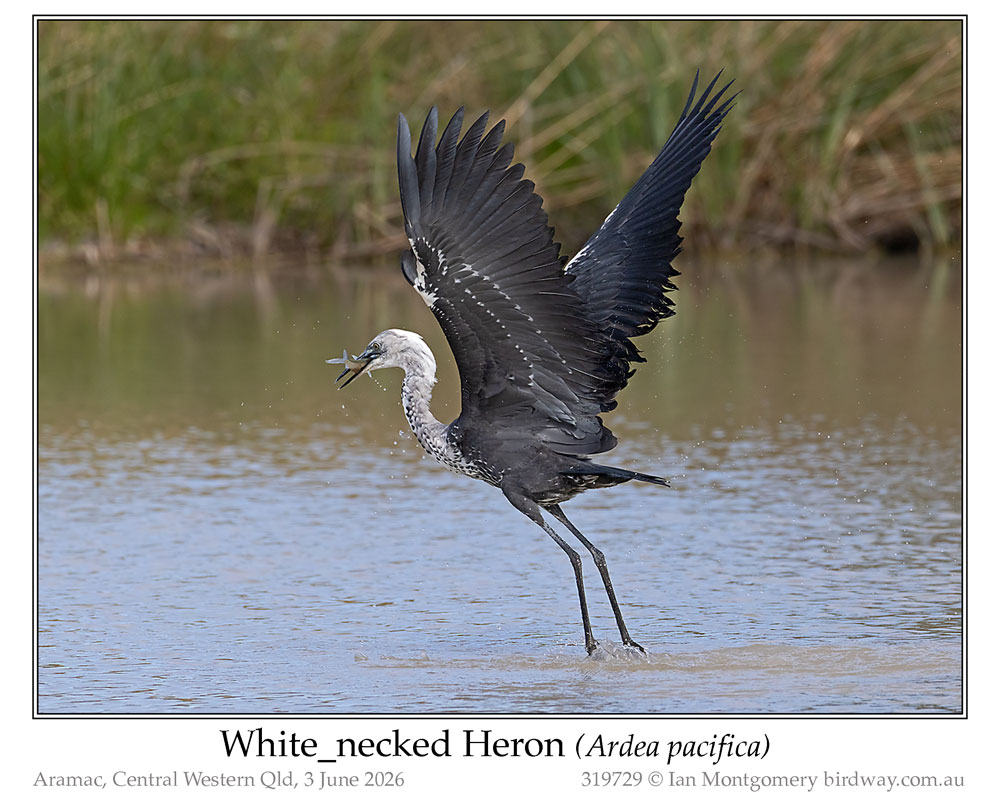
Herons swallow fish head first to prevent the spines in the fins getting stuck in the mouth, throat or oesophagus. As this bird is taking off it is using its bill and tongue to manipulate the fish in preparation for swallowing.
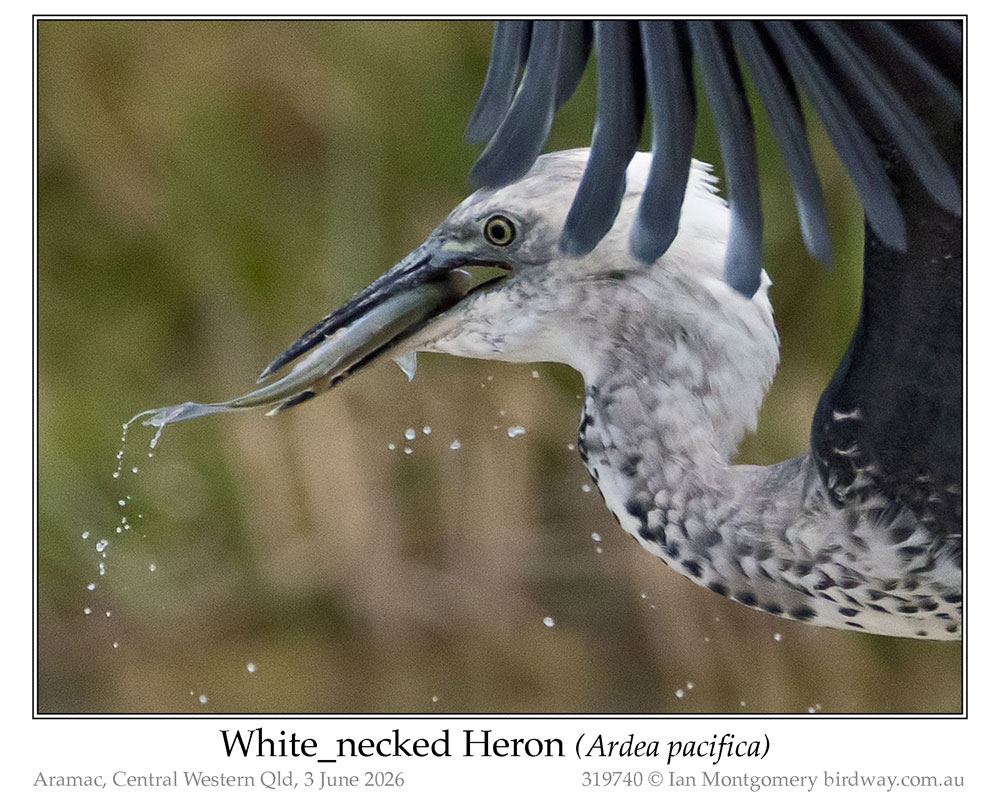
I was intrigued by the size of the fish. The bill of a White-necked Heron is about 8 to 9cm in length, so this fish is at least 12cm long. According to the literature, the longest recorded fish captured by a White-necked Heron is a 10cm catfish, so this one is breaking records. I tried to find out what species of fish this is by Googling the types of fish found in the Lake Eyre Basin, but didn't find anything that looked like this one, so I'd be interested to hear from anyone who can identify it (ianbirdway@gmail.com).
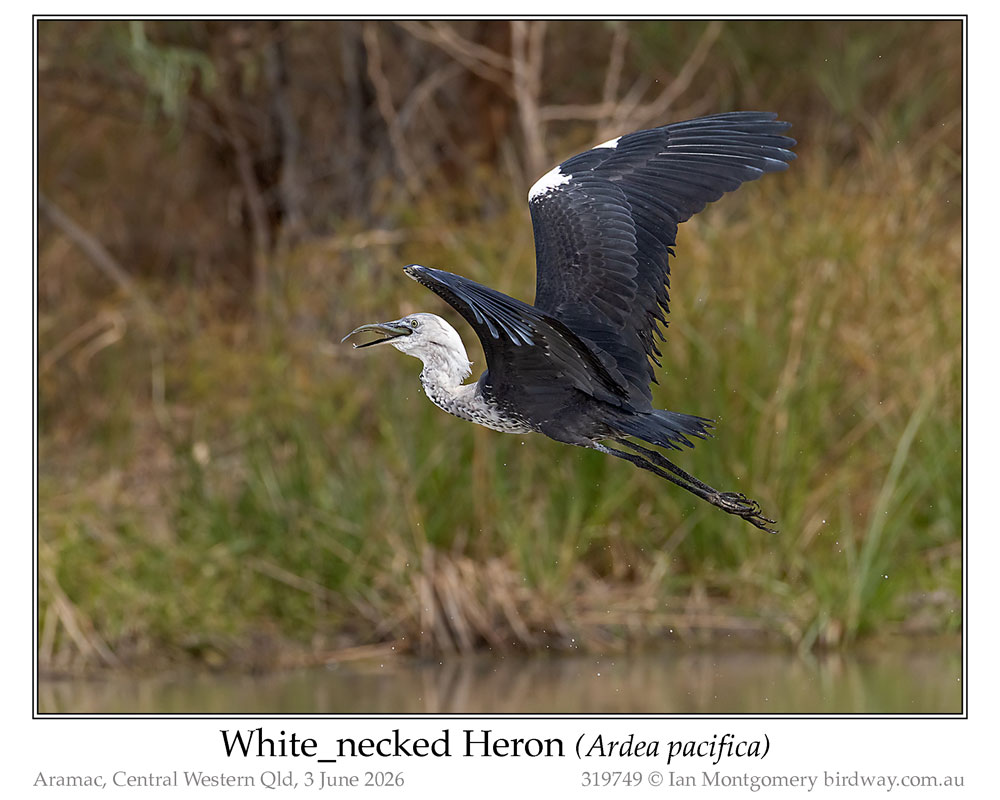
The following photo was taken less than three seconds after the fish reached the water and the unfortunate fish has already been safely dispatched. If you look carefully you can just see one side of the tail fin of the fish sticking out of the side of the bill a couple of centimetres in front of the eye of the heron.
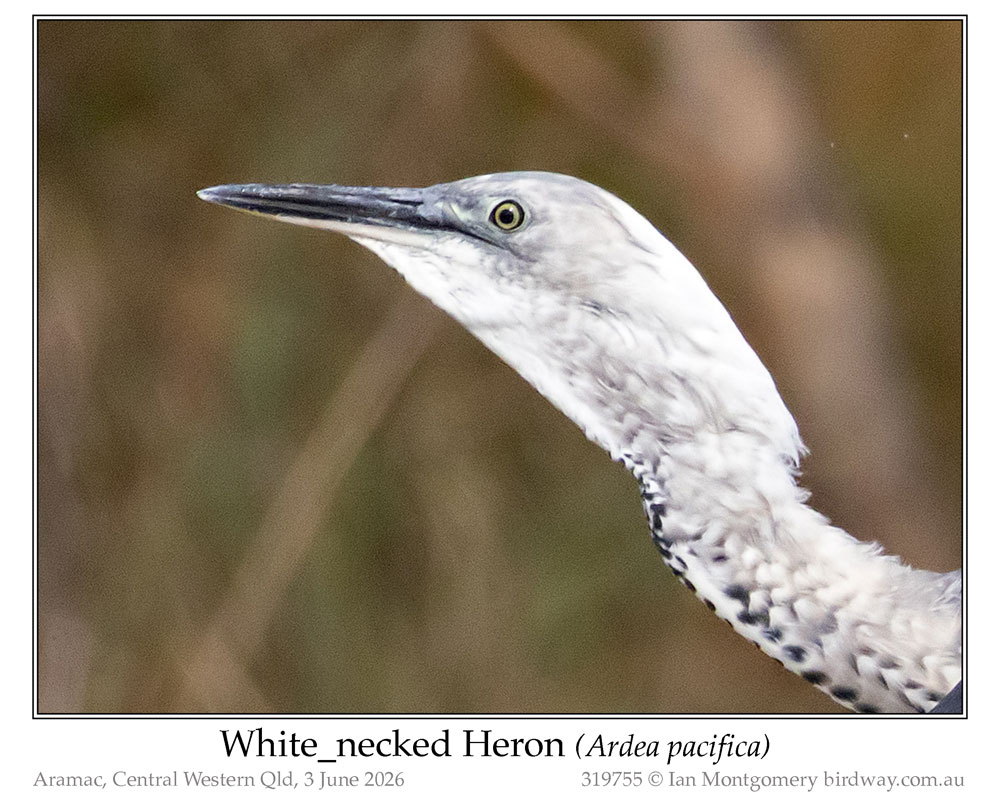
After that the Heron then turned around and flew past me, still dripping water, in what looked like a triumphant fly-past.
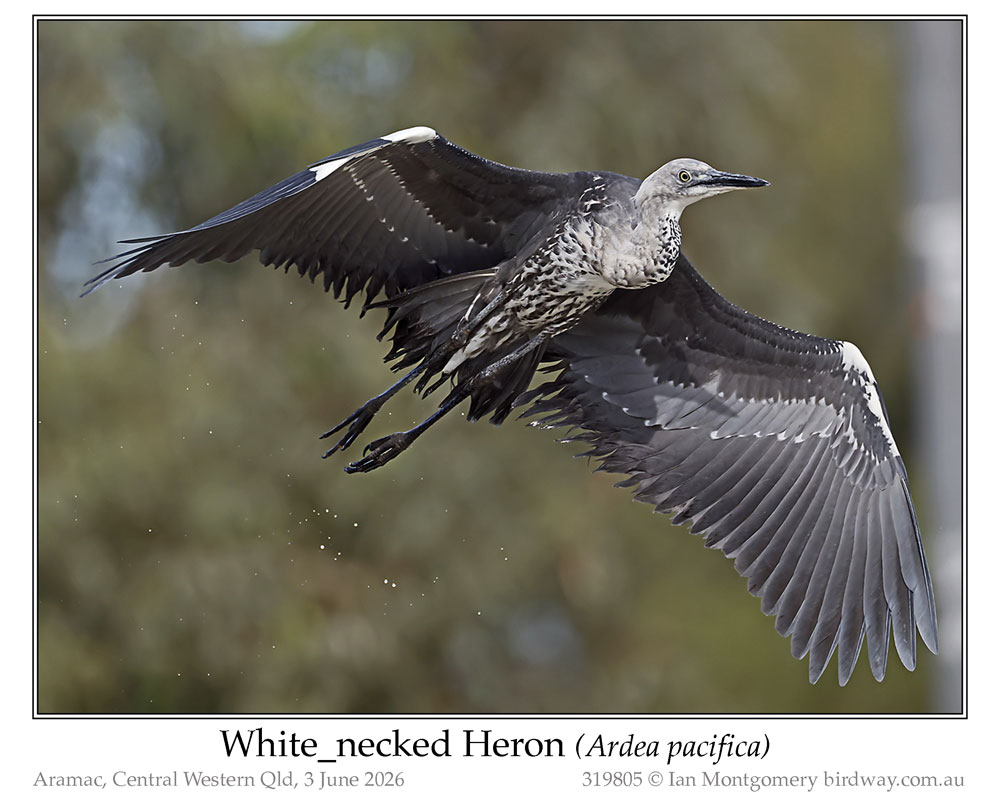
Given that Herons rarely dive, I was very impressed with the speed at which it was executed, the skill it showed in catching the fish and the way it swallowed it effortlessly in flight.
Greetings
Ian
Join the The Irregular Bird Club
Birdway has a free Irregular Bird - formerly Bird of the Moment/Week - Club, enjoyed around the world since 2002 by currently 1000 members. An illustrated article is sent to club members at intervals. The photos are significantly better quality images than those on this web page which are compressed more for faster loading.

The club is a Google Group called Birdway to which only Ian can post. To join the group, enter your email address in the Google box below and click the Join button. This will take you to the Google Group joining page for confirmation. Alternatively, email Ian directly using the Contact link below and he'll gladly do it for you and answer any questions.
Ian also uses the Irregular Bird to keep club members up to date with developments, such as improvements to the website and publication of ebooks. He will not reveal your email address to anyone else nor use it for any other purpose.
Page revised on 20 September 2026